

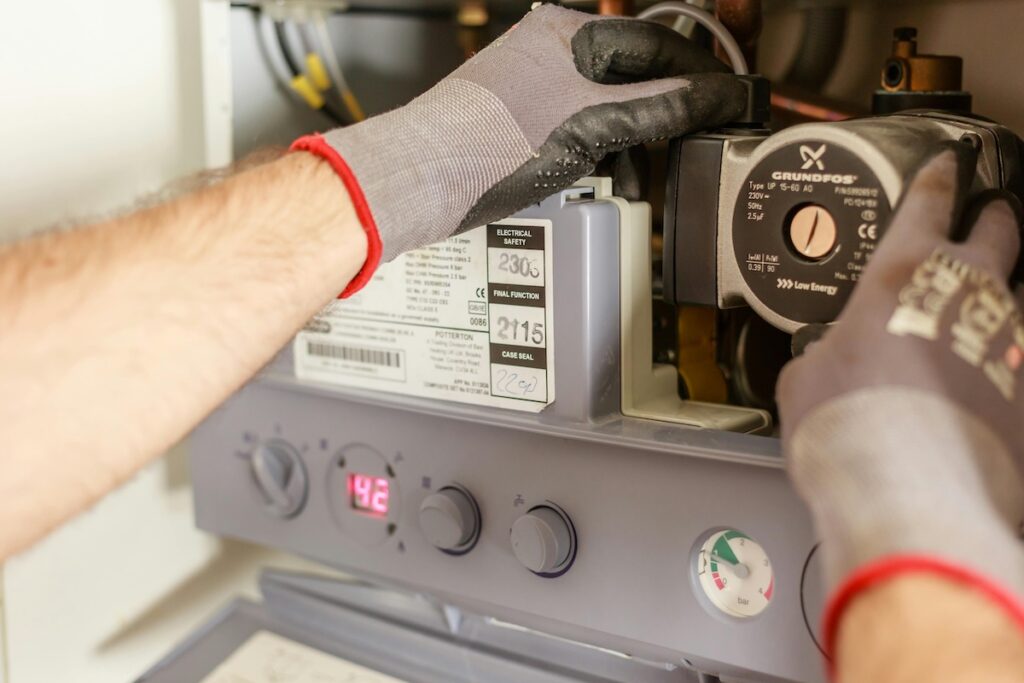
A central heating boiler can make various types of sounds. It’s important to know the difference between a normal operating sound and a disruptive noise that may indicate a fault. In this article, you’ll find an overview of the possible causes of these sounds and what you can do yourself to fix the problem.
- Which central heating boiler sounds are normal?
- Common central heating boiler sounds and what they mean
- When is a boiler sound immediately dangerous?
- What can you do yourself when your boiler makes noise?
- This is how you prevent your boiler from making noise
- When should you call an engineer?
- Frequently asked questions about a noisy boiler
- Conclusion
Which central heating boiler sounds are normal?
Not every sound from the boiler is cause for panic. The following are part of normal operation:
- Brief sound when starting up: When the boiler fires up, you hear the burner and pump kick in.
- Light ticking: This is often caused by metal expanding as the boiler heats up.
- Temperature fluctuations: The heating and cooling of water causes natural sounds throughout the system.
- Sounds at night: Because everything is quiet at night, the normal sounds of the CH boiler simply stand out more.
Common central heating boiler sounds and what they mean
Different sounds have specific causes. Recognising the type of sound helps determine whether it’s an innocent operation or a fault. Below, the most common complaints are addressed, along with guidance on when you can take action yourself or when you need an engineer.
Boiler ticking: Possible causes
A ticking sound is often caused by pipes or radiators expanding due to heat. Air in the system or large temperature differences at start-up can also cause this. Usually this ticking is harmless, but if it’s persistent and loud, further investigation is advisable.
Boiler making a humming sound
A humming sound can indicate a problem with the circulation pump or the water flow. Resonance in the pipes or incorrect water pressure are also known causes. A constant hum can be a sign of wear to the pump or another faulty component. Limescale and sludge in the pipes or on the heat exchanger can also cause a hum or soft gurgling. Regular cleaning of the installation prevents this build-up from causing bigger problems.
Boiler whistling or squealing
A whistling or squealing sound is a common complaint and always warrants attention. The most common cause is limescale on the heat exchanger. Lime build-up restricts the flow, causing water to be forced through a narrowed opening under pressure, producing a high-pitched whistling sound. Another cause may be excessive gas pressure, where the burner operates irregularly and produces a squealing or hissing sound. In both cases, it’s wise to call an engineer for inspection and cleaning.
Heating or pipes making a banging sound
Do you hear a banging sound? This is often caused by air bubbles in the system or water hammer. Other causes include poor pipe fixings to the wall or incorrect pump settings. It’s advisable to address this, as persistent banging poses risks to the pipework.
When is a boiler sound immediately dangerous?
In some cases, the sound is a warning of an unsafe situation. Take immediate action if you notice:
- Loud knocking or explosive sounds when igniting.
- A fault notification or error code on the boiler display.
- ● Rapid pressure loss in the system or visible leakage.
- A smell of gas near the boiler combined with unusual sounds.
What can you do yourself when your boiler makes noise?
Before calling for help, you can check and carry out the following:
- Check the water pressure: Make sure the pressure is between 1.5 and 2.0 bar.
- Bleed the radiators: Air is the most common cause of noise.
- Reset the boiler: Sometimes a simple restart resolves the issue.
- Check for leaks: Inspect the boiler and connections for moisture.
This is how you prevent your boiler from making noise
Regular maintenance is the best way to prevent noise nuisance. A few practical tips:
- Check the water pressure monthly. A pressure between 1.5 and 2.0 bar is ideal. Too low a pressure puts unnecessary strain on the pump.
- Bleed the radiators every year, preferably at the start of the heating season, so no air remains in the system.
- Have annual maintenance carried out by a certified engineer. They not only check safety but also spot wear before it leads to breakdowns.
- Be mindful of limescale. Do you have hard water? Consider a water softener or periodic cleaning of the heat exchanger. Limescale is one of the most common causes of noise nuisance in the long run.
When should you call an engineer?
Some problems you can solve yourself, but there are situations where it’s best to seek professional help right away. Do so in any case when:
- ● The noise persists or worsens after you’ve bled the radiators and corrected the water pressure.
- ● The boiler shows an error code or fault notification on the display.
- ● You smell gas near the boiler. In that case, also turn off the gas supply and leave the room.
- ● There is visible leakage at the boiler or the pipes.
- ● The boiler repeatedly shuts down or switches itself off.
- ● You hear a whistling or squealing sound indicating limescale or a gas pressure problem.
An engineer has the right diagnostic equipment to quickly identify the cause. In the case of limescale or sludge, cleaning the installation can already resolve a great deal. For an older boiler with recurring problems, an engineer can also advise whether repair still makes sense, or whether replacing the CH boiler is the better choice.
Frequently asked questions about a noisy boiler
This is because it’s often noisier during the day, making the sounds more noticeable at night. The boiler also frequently starts up early in the morning or late at night due to the programmed night setback setting.
In most cases this is normal and caused by the expansion and contraction of the pipes. Only if the ticking is very loud and persistent might there be a technical problem.
This is often the result of air in the system or poor water flow. A vibrating pump or pipes resting against each other can also cause a hum.
The best approach is to bleed the installation properly and keep the water pressure at the right level. Additionally, regular maintenance by a professional ensures long-lasting, quiet operation.
Conclusion
Most sounds from a CH boiler are harmless and easy to fix by checking the water pressure, bleeding the radiators, or resetting the boiler. Nevertheless, it’s wise not to ignore sounds for too long. What starts as a light ticking or soft hum can indicate limescale, wear, or a pressure problem that will only get worse if left unaddressed.
Act in time: a small intervention now prevents an expensive repair later. If the complaints keep returning or the noise is accompanied by a fault or smell of gas, contact one of our engineers immediately for safe and quiet operation of your installation.