

Refilling your heat pump is an essential part of maintenance. Low water pressure can cause malfunctions and reduce the system’s efficiency. Regularly checking and refilling helps prevent problems. In this article, you’ll learn step by step how to do this safely and correctly, ensuring your heat pump continues to run efficiently and reliably.
When should you refill a heat pump?
There are several situations in which refilling is necessary:
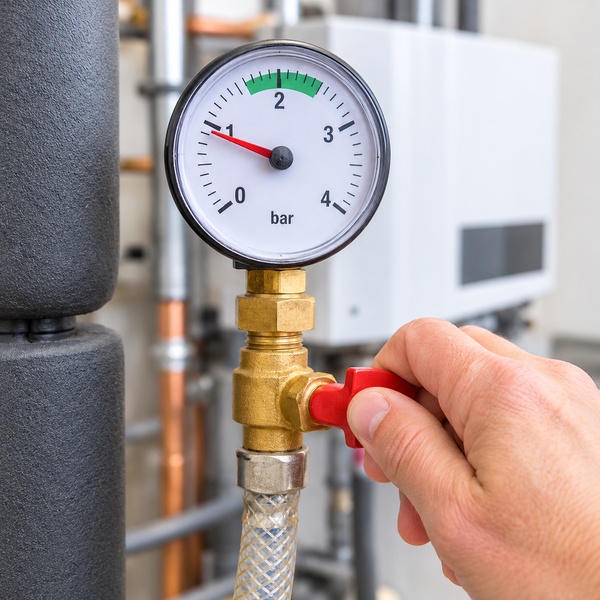
When the water pressure drops below 1.5 bar (shown on the display or app).
If your heating system is not warming properly, which can indicate circulation issues due to low pressure.
When an error code or warning for pressure loss appears.
After maintenance activities such as bleeding radiators, which can lower system pressure.
What do you need to refill a heat pump?
Before refilling, make sure you have the right tools on hand:
- A filling hose (suitable for heating systems)
- A water tap near the heat pump
- The user manual of your heat pump (to locate filling points and follow display instructions)
- Optionally: a bucket or cloth to catch excess water
Step-by-step guide
Topping up your heat pump is something you can carefully do yourself. We’ve created a step-by-step plan to help you quickly get the pressure in your heat pump back to the correct level.
- Switch off the heat pump
Turn the system off or set it to standby to prevent active operation during refilling. - Attach the filling hose to the water tap
Let water flow through the hose first before connecting it to the heat pump. This prevents air from entering the system. - Connect the other end to the system’s filling valve
Ensure the connection is tight and leak-free. - Slowly open both valves
Allow water to enter gradually to avoid pressure spikes and air bubbles. - Check the pressure on the display
Refill until the pressure reaches around 1.8 bar (check your manual for the recommended value). - Close both valves and disconnect the hose
Close the water tap first, then the system’s filling valve. Keep a cloth handy for excess water. - Bleed the system if necessary
Remove air by bleeding radiators or designated vent points. - Switch the heat pump back on
Restart the system and check for error messages or irregular behavior.
Tip: If the pressure drops regularly, have the system checked for leaks.
Common mistakes when refilling a heat pump
There are several mistakes you can make when you decide to top up your heat pump yourself. The most common are:
- Leaving air in the hose → causes air bubbles in the system
- Overfilling → pressure above 2.5 bar can damage components
- Not closing the filling valve properly → risk of leaks
- Refilling while the pump is running → unsafe and may trigger faults
Safety warnings and precautions
When working on a heat pump system, safety and care are paramount. An error during refilling can result in damage to the system or dangerous situations. Therefore, it’s important to check the following points. This will ensure you can refill your heat pump safely and in a controlled manner.
- Always switch the system off before refilling
- Take your time—rushing increases the risk of mistakes
- Use a proper filling hose with rubber seals to avoid leaks
- Monitor the display or pressure gauge throughout the process
- Know the location of the main shut-off valve in case of a leak
Differences by heat pump type
Different heat pumps require slightly different approaches:
Hybrid heat pump: Works alongside a boiler. Refilling usually takes place via the boiler side, using the boiler’s filling point and pressure gauge—similar to a traditional heating system.
Full electric heat pump: Refilling happens via a direct connection or the buffer tank. Because the system is sensitive to pressure fluctuations, regular checks are essential.
Air-to-water heat pump: Uses outside air to heat water. Refilling and bleeding typically happen via a central point at the indoor unit or buffer tank. While simpler, precision is key to prevent trapped air that reduces efficiency.
Always consult your manual or ask an installer if in doubt.
Frequently Asked Questions (FAQ)
It is important to check the water pressure of your heat pump every six months. The heat pump needs to be topped up if the water pressure falls below 1.5 bar. If your heat pump indicates a fault or stops working properly, this may also mean that you need to add more water.
For a heat pump, venting the system after topping it up is important. Air often enters the system during the refilling process. This air reduces efficiency and can disrupt operation. Therefore, it is essential to ensure the system is thoroughly vented after topping it up. This is especially important for low-temperature systems.
Adding a little too much fluid is usually not harmful. However, if the pressure becomes too high, the pressure relief valve may discharge water, or the system may become unbalanced. This reduces efficiency and can cause damage over time. Therefore, stick to the recommended pressure. Typically between 1.5 and 2 bar.
Refilling is possible, but proceed with caution. A heat pump system is often more complex than a standard central heating boiler. Refilling it incorrectly or allowing the pressure to become too high can cause damage. Always consult the manual and use the correct filling point. If you are in any doubt or unfamiliar with the system, it is safer to call in a professional.
Conclusion
You can refill a heat pump yourself, but it requires care. The key points:<br/>Ideal pressure is usually between 1.5 and 2 bar<br/>Follow the steps slowly and carefully<br/>Always bleed the system afterwards<br/>Use proper tools for safe refilling
If you’re uncertain, it’s best to call a certified installer to avoid costly mistakes.