

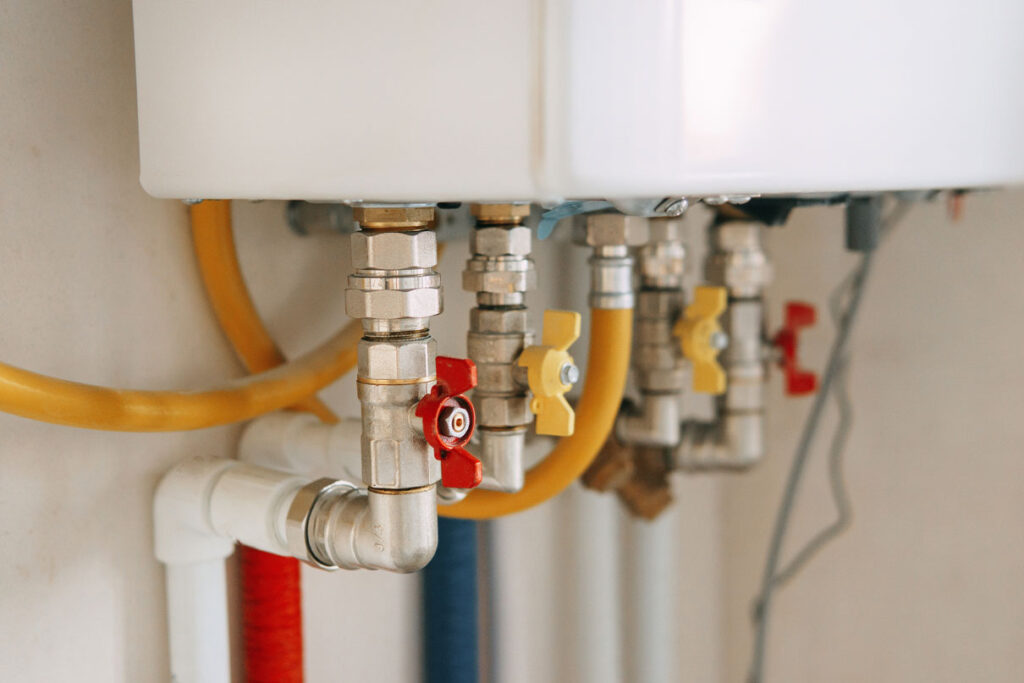
No hot water or cold radiators? There’s a good chance your boiler’s water pressure is too low. You can check this easily via the boiler’s display: the pressure should be between 1.5 and 2.0 bar. If the pressure is lower, it’s time to refill your boiler. In this article, we explain step by step how to safely and easily refill your central heating system.
Summary
A well-functioning boiler ensures you have hot water and that your home stays comfortably warm. However, the water pressure can occasionally drop. If this happens, your boiler needs to be refilled with water.
How to know when your boiler needs refilling
There are several signs that indicate your boiler needs refilling. The most common reason is low water pressure, which should be between 1.5 and 2.0 bar. Your boiler display may also show a warning. Other indicators include:
No hot water availability
Radiators not heating properly
Uneven boiler operation
Radiators cooling down before the entire system has heated
If any of these signs appear, it may be time to refill your boiler.
Boiler refilling step-by-step guide
Follow these steps to safely refill your central heating system:
Step 1: Check the water pressure
Turn on the boiler. When the green light goes out, check the water pressure. If it’s below 1.5 bar, refilling is necessary.
Step 2: Bleed the radiators
Before refilling, bleed all radiators to remove trapped air. This helps stabilize water pressure.
Step 3: Turn off the boiler
Switch off your boiler before refilling to prevent unnecessary circulation and ensure safety. There’s no need to adjust the thermostat.
Step 4: Connect the filling hose to the water tap
Ensure the hose is completely filled with water to prevent air entering the system.
Tip: It’s handy to place a bucket under the hose’s end.
Step 5: Connect the other end to the boiler filling valve
Remove the cap from the filling valve. Do not open the valve yet.
Step 6: Open the water tap, then the filling valve
Turn on the water tap first, then rotate the boiler’s filling valve a quarter turn. Refill until the display shows a pressure between 1.8 and 2.0 bar.
Step 7: Close the filling valve, then the water tap
Close the valves in reverse order. Any excess water can be collected in a bucket.
Step 8: Turn the boiler back on
Press the power button once to restart the boiler. Check that the green light comes back on.
Step 9: Bleed each radiator again
Some air may have entered the system during refilling. If you hear gurgling sounds or the tops of radiators remain cold, bleed the radiators starting with the ones closest to the boiler. Recheck the water pressure and refill if it has dropped below 1.5 bar.
Why boiler maintenance is important
Regular maintenance ensures your boiler operates efficiently and safely. Key reasons include:
1. Prevent breakdowns
Periodic maintenance prevents malfunctions caused by incorrect settings and reduces unnecessary wear or corrosion on components.
2. Warranty compliance
Manufacturers specify maintenance intervals, usually annually or every 2–3 years. Regular maintenance ensures warranty coverage remains valid for the boiler and its parts.
3. Avoid dangerous situations
Neglecting boiler maintenance can create hazards, such as carbon monoxide poisoning. Carbon monoxide is a deadly, odorless gas produced during incomplete combustion.
Conclusion
Regularly checking your boiler’s water pressure and refilling it as needed—following the proper steps—helps prevent breakdowns. In a well-functioning, closed system, refilling is rarely required. Proper maintenance not only prevents dangerous situations like carbon monoxide exposure but also ensures your boiler’s warranty remains valid.